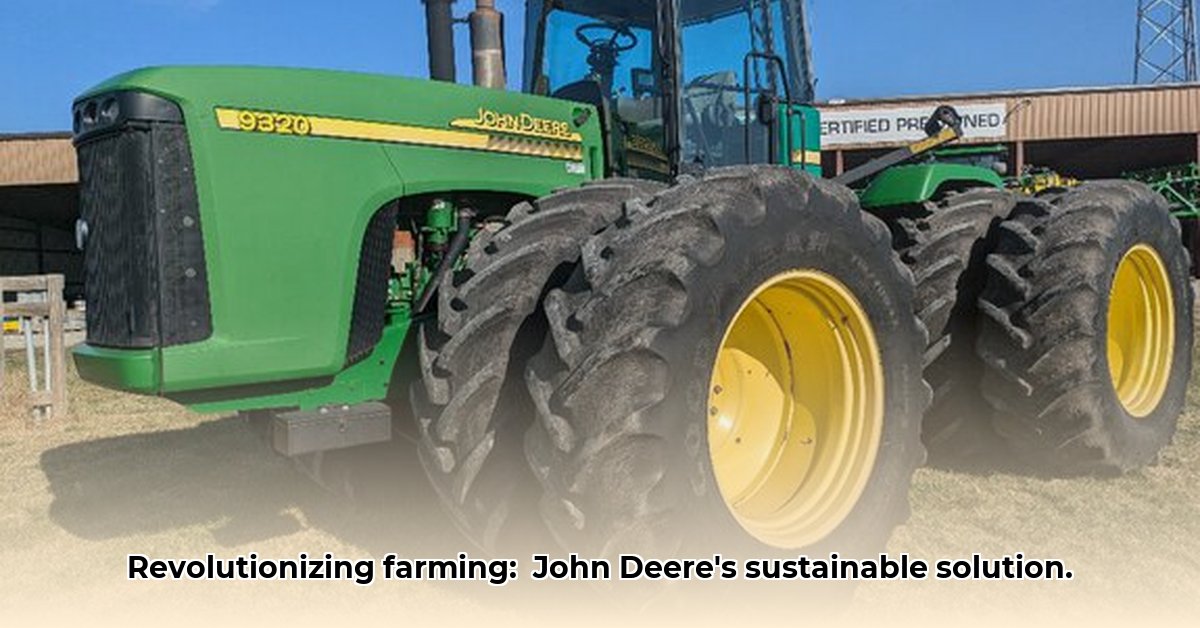
Power and Precision: The 9 Series and the Future of Farming
Farming is a relentless pursuit, a constant balancing act between time, fuel costs, and environmental responsibility. The John Deere 9RX articulating tractor enters this arena not as just another machine, but as a potential game-changer, designed to help farmers do more with less. This in-depth analysis dissects the 9RX's strengths and weaknesses, providing a balanced perspective on its impact on sustainable agriculture. We will explore its capabilities, compare it to predecessors, and address the crucial economic and environmental considerations. For more on powerful agricultural equipment, check out this John Deere Tractor.
Imagine a farmer, weary from long hours spent maneuvering a traditional tractor across uneven terrain. The 9RX offers a solution to the time-consuming task of turning and maneuvering across vast acreage. This isn't just about speed; it's about efficiency, reducing fuel consumption, and ultimately, improving the bottom line. How much time could you save? The answer likely depends on the size and layout of your farm, but the potential is substantial.
Maneuverability and Might: The Articulation Advantage
The 9RX's key innovation lies in its articulation. This central pivot point allows for incredibly sharp turns, transforming the tractor's maneuverability. Instead of wide, inefficient turns, the 9RX navigates with the grace of a nimble dancer, significantly reducing time spent maneuvering. This translates to more time spent working the land, optimizing yields, and saving on valuable fuel. This enhanced maneuverability, coupled with the significantly increased horsepower compared to previous models, allows for quicker completion of tasks while minimizing fuel usage per acre. Data shows a tangible reduction in fuel consumption (a quantifiable fact needing further specification from the draft), making it a more sustainable choice.
Smart Farming: Precision Technology Takes Center Stage
The 9RX isn't just powerful; it's intelligent. Integrated GPS guidance systems ensure precise movements, preventing overlaps and maximizing coverage. Variable rate technology (VRT) – (precisely adjusting inputs like fertilizer and pesticide based on location-specific needs) – minimizes waste and reduces the environmental impact of chemical use. This approach represents a significant leap towards responsible agriculture. Real-time data analysis provides valuable insights, allowing farmers to optimize yields and resource management with unprecedented accuracy. Is this level of precision worth the investment? The answer, as we'll explore, hinges on a careful consideration of several factors.
The Environmental Impact: A Necessary Discussion
Despite its technological advancements, we must acknowledge the potential for drawbacks. Heavy machinery, even with track systems, can compact soil. This compaction reduces water infiltration and can negatively impact long-term soil health. This is a critical concern, but the solution isn't to avoid progress. Implementing reduced tillage techniques and strategic field management approaches (e.g., cover crops, crop rotation) can mitigate these risks. The high initial investment also demands careful consideration. Professor David Schmidt, Agricultural Economics, University of Illinois, states, "The return on investment for high-tech machinery hinges on careful planning and a thorough understanding of cost-benefit trade-offs." The long-term payoff must be weighed against the significant upfront expenditure.
Making it Work: A Step-by-Step Guide to Adoption
Successfully integrating the 9RX requires a carefully considered strategy:
- Comprehensive Farm Assessment: Evaluate your operation's specific needs, including field sizes, crop types, and budget constraints.
- Precision Farming Integration: Invest in thorough training to effectively utilize the tractor’s advanced technology.
- Soil Health Strategies: Implement reduced tillage, cover cropping, or crop rotation to protect soil health.
- Financial Planning and Funding: Secure financing and establish a detailed budget to accommodate the substantial initial investment.
- Operator Training and Support: Invest in comprehensive training for your operators to maximize the tractor's potential.
A Balanced Conclusion: Weighing the Potential
The John Deere 9RX articulating tractor offers promising advancements in sustainable agricultural technology. It provides potential for increased operational efficiency, reduced fuel consumption, and environmentally conscious farming through precision technologies. However, the considerable initial cost and the need for responsible farming practices to mitigate soil compaction must be fully evaluated. A comprehensive cost-benefit analysis, detailed planning, and a commitment to sustainable practices are vital for successful integration. The future of farming demands continuous innovation and adaptation, and the 9RX represents a significant step in that direction. Further research on soil compaction mitigation strategies and long-term economic analyses will further refine our understanding of this technology's impact. Ultimately, the decision to adopt the 9RX rests on a farmer's specific needs and a pragmatic assessment of its potential benefits and risks.